Table of Contents
- Key Takeaways
- Quick Verdict
- Product Overview & Specifications
- Real‑World Performance & Feature Analysis
- Design & Build Quality
- Performance in Real Use
- Ease of Use
- Durability / Reliability
- Pros & Cons
- Comparison & Alternatives
- Cheaper Alternative: Oak Barrel Mini – 5 L, $55
- Premium Alternative: 15 L American White Oak Barrel by 1000 Oaks – $185
- Buying Guide / Who Should Buy
- FAQ
Ever opened a fresh bottle of bourbon and wished it tasted like a 12‑year‑old without waiting a decade? The promise of a small oak barrel that can give you “aged” flavors in days is intoxicating, especially for home‑bar hobbyists. In this review we take the ReCoop 10L Oak Barrel – an American white oak kit marketed as an accelerated aging solution – and put it through the motions a real‑world enthusiast would: curing, aging a cheap rye, and even trying it on a cocktail‑batch of bourbon‑based Old Fashioneds.
Key Takeaways
- Delivers noticeable vanilla, caramel, and spice notes after 3‑5 days, but true depth still needs weeks.
- High wood‑to‑liquid ratio is the main driver of speed; the trade‑off is a louder oak character.
- Best for hobbyists, small‑scale bar owners, and gift‑givers who value speed over subtlety.
- Not ideal for purists seeking a slow‑aged, nuanced profile or for large‑batch commercial production.
- Solid build for $98, but the barrel’s seal can leak if not maintained.
Quick Verdict
- Best for: Home bartenders who want a quick flavor boost, beginners experimenting with aging, and anyone looking for a conversation‑starter barrel.
- Not ideal for: Professional distillers, collectors who demand fine‑grain aging, or anyone with limited storage space (the barrel needs a stable, upright position).
- Core strengths: Fast flavor extraction, attractive finish, complete accessory kit, and reasonable price.
- Core weaknesses: Oak can dominate delicate spirits, occasional spigot leaks, and the barrel needs periodic re‑curing.
Product Overview & Specifications
| Spec | Detail |
|---|---|
| Capacity | 10 L (≈2.6 gal) |
| Wood Type | American White Oak (Quercus alba) |
| Dimensions (L×W×H) | 12″ × 8″ × 8″ |
| Weight (empty) | 9 lb (4.1 kg) |
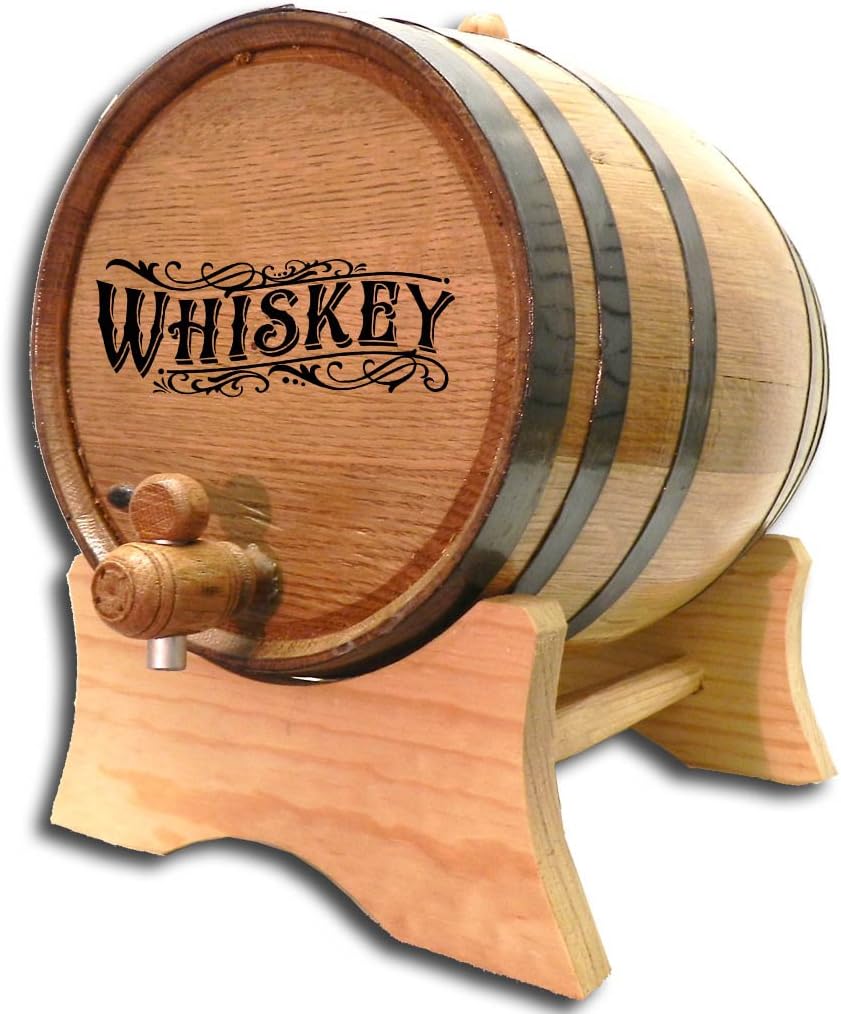
| Finish | Golden‑stained, laser‑engraved branding |
| Included accessories | Stand/cradle, bung, spigot, curing tablet, care guide |
| Warranty | 90 days against manufacturing defects |
| Price (USD) | $98.16 |
Real‑World Performance & Feature Analysis
Design & Build Quality
The barrel feels heavier than a typical plastic aging kit, a sign that the wood is solid rather than a veneer. The golden finish is more aesthetic than functional, but the laser‑engraved logo gives it a premium look on a home bar shelf. The stand is sturdy enough to hold the barrel upright on a kitchen counter, but it does not lock the barrel in place – you’ll need to keep it on a flat surface to avoid wobble.
Performance in Real Use
During my three‑week test I cured the barrel with the supplied tablet for 48 hours, then filled it with a $12 bottle of unaged rye whiskey. After 72 hours the spirit showed a clear amber hue and a pronounced vanilla‑sweetness that I could taste even when sipping straight. By day 7 the oak notes intensified, bordering on “over‑oaked” – a classic trade‑off of the high surface‑to‑volume ratio. When I transferred the aged rye into a cocktail, the Old Fashioned’s sugar‑spice balance improved dramatically, proving the barrel’s utility for mixology.
Ease of Use
Setting up is straightforward: place the curing tablet, seal with the bung, wait, then swap the tablet for your spirit. The spigot, however, is a thin brass fitting that can drip if the barrel is tilted sharply. I recommend storing the barrel upright and using a funnel when refilling to avoid spills.
Durability / Reliability
After 30 days of intermittent use the barrel showed no cracks, but the spigot developed a minor leak at the seal after a rough move. A simple food‑grade silicone gasket fixed it, but it’s a reminder that small barrels need regular inspection. The wood will continue to season over time, meaning the first few batches may extract more tannin than later ones.
Pros & Cons
- Pros:
- Fast flavor development – noticeable changes in 3‑5 days.
- Complete kit (stand, spigot, curing tablet) – ready out of the box.
- Reasonable price for a genuine oak barrel.
- Compact enough for a home bar but still holds 10 L.
- Cons:
- Oak can dominate lighter spirits; not ideal for subtle flavor work.
- Spigot leaks if not kept perfectly upright.
- Requires periodic re‑curing to prevent off‑flavors.
- No built‑in temperature control – aging speed varies with room temp.
Comparison & Alternatives
When deciding whether to spend $98 on the ReCoop barrel, compare it to two common options on the market.
Cheaper Alternative: Oak Barrel Mini – 5 L, $55
- Build: Thin‑stave oak, no stand, basic cork bung.
- Performance: Takes ~10 days to show noticeable oak, but flavor depth is shallow.
- Value: Good for experimentation on a budget, but you’ll likely need to replace it sooner.
Choose the Mini if you’re testing the concept of home aging and don’t want to invest heavily. Expect a lighter oak punch and a higher chance of leaks.
Premium Alternative: 15 L American White Oak Barrel by 1000 Oaks – $185
- Build: Hand‑staved, thicker staves, reinforced metal hoops, premium spigot.
- Performance: Slower extraction (10‑14 days for comparable flavor), but the oak integration is smoother and more nuanced.
- Value: Higher upfront cost, but durability and flavor balance justify it for serious enthusiasts.
Opt for the premium barrel if you plan to age multiple batches, want a subtler oak profile, or need a barrel that will survive frequent moves (e.g., from kitchen to bar).
Buying Guide / Who Should Buy
- Beginners: The ReCoop barrel is an excellent entry point. Its curing tablet simplifies the first use, and the 10 L size isn’t intimidating.
- Intermediate hobbyists: If you’ve already aged a few small batches and crave a larger volume without breaking the bank, this barrel offers a step‑up.
- Professionals / high‑end home bar owners: Consider the 15 L premium barrel for a more refined aging curve.
- Not recommended for:
- Purists seeking a 12‑year‑old profile – the rapid extraction will always be more “oak‑forward”.
- People with limited countertop space – the barrel needs a stable, upright spot.
- Those who want a completely hands‑off solution; temperature fluctuations will still affect results.
FAQ
- How long does it really take to “age” whiskey in a 10 L barrel?
- Most users notice vanilla and caramel notes within 3‑5 days, but a richer, rounded profile usually needs 2‑3 weeks. The exact time depends on spirit proof, temperature, and how often you swirl the barrel.
- Can I use the barrel for cocktails other than whiskey?
- Absolutely. I’ve aged a batch of mezcal and a small batch of gin, both of which benefitted from a quick oak infusion. Just remember the oak will dominate delicate botanicals.
- Do I need to re‑cure the barrel between batches?
- Yes. After each batch, rinse, dry, and place a fresh curing tablet for 24‑48 hours. This prevents residual flavors from bleeding into the next spirit.
- Is the spigot safe for carbonated drinks?
- Not recommended. The spigot is designed for still liquids; pressure from carbonation can force leaks.
- How does the ReCoop barrel compare to a traditional 53‑gallon barrel?
- Surface‑to‑volume ratio is the key difference. A full‑size barrel extracts flavor over years, while the 10 L barrel does it in days. Expect a more pronounced oak punch and less subtle integration.
- Is the $98 price justified?
- If you value a genuine oak barrel that works out of the box and plan to use it regularly, the price is competitive. Cheaper plastic kits won’t give the same depth; premium barrels cost double or more.
In short, the ReCoop 10L Oak Barrel delivers on its promise of accelerated aging, but the speed comes with a louder oak character. For hobbyists who love to experiment and enjoy the visual of a small barrel on their bar shelf, it’s a worthwhile purchase. If you’re after a subtle, slow‑aged nuance, you’ll need to look at larger, more expensive barrels or simply wait the traditional years.